Case Study - Establishing Research Infrastructure for a Product Team in the Dark
Bringing together expert input and user perspective to make invisible operations visible, creating clear direction for leadership decisions.
- Client
- Operational services company powered by internal platforms and tools
- Service
- Enterprise UX Research & Discovery Infrastructure
Overview
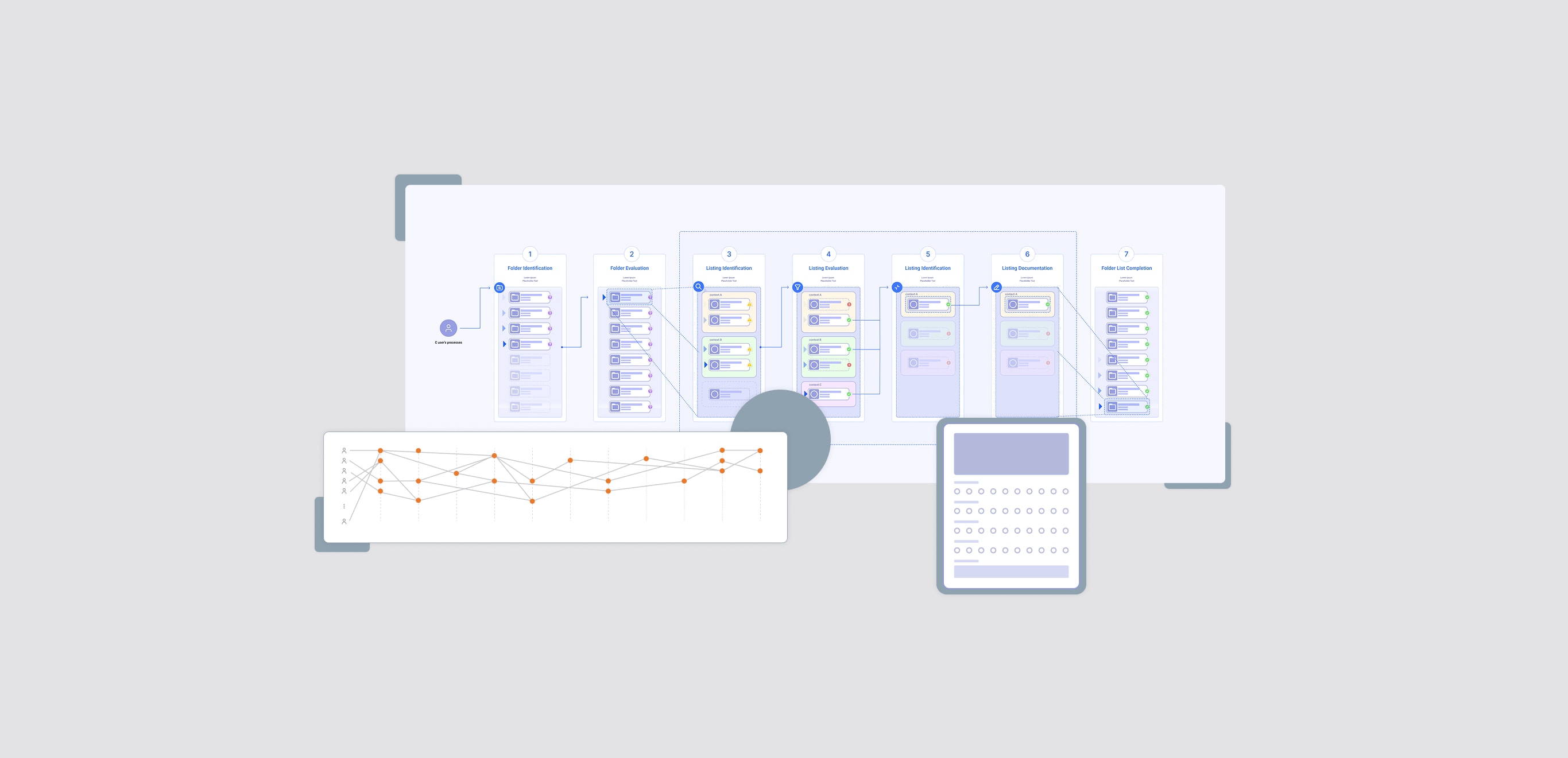
A newly formed product team was responsible for improving a business-critical operational review process. They had high-level KPIs, operational user complaints, and tool backlogs, but couldn't prioritize confidently because the process's complexity made it impossible to identify bottlenecks and their importance.
My role: Establish the discovery infrastructure so the team could move from reactive to strategic.
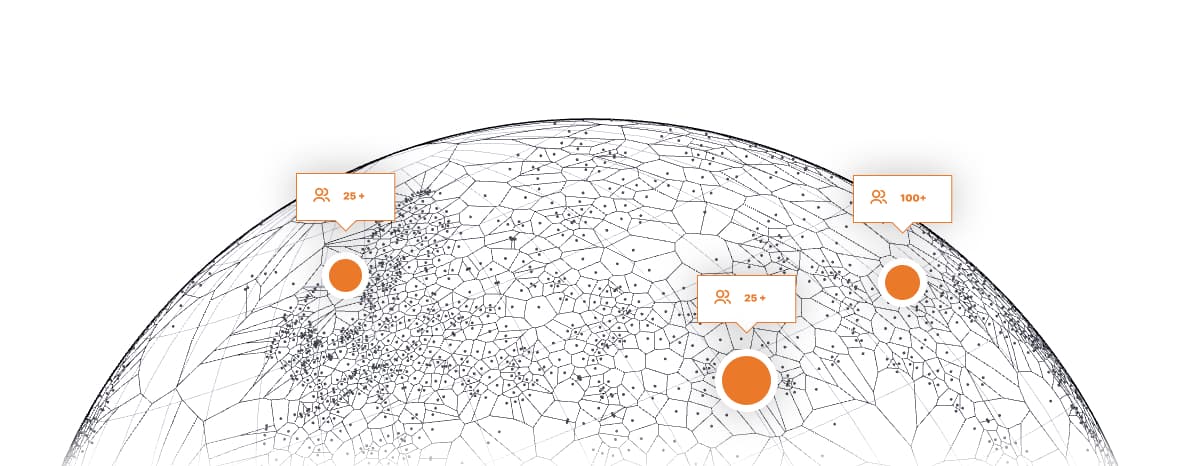
- Operational users across offices
- 150+
- Internal and external tools in use
- 30+
- Revenue managed per cycle
- $10M+
The Gap
The team had pieces, but no one connecting them.
| Who | What they owned | What they couldn't do |
|---|---|---|
| High-Level Stakeholders | Strategic direction, investment decisions | Connect strategy to operational reality |
| Product Team | Individual tool backlogs | See cross-tool patterns or process impact |
| BI Analysts | Outcomes (throughput, revenue) | Tie numbers to specific steps and tools |
| Operations | Process knowledge and deficiencies | Translate to product priorities |
What I Established
Three steps that turned fragmented insight into a decision-ready system.
1. The Process Model
A shared baseline for understanding how the work actually flows end to end.
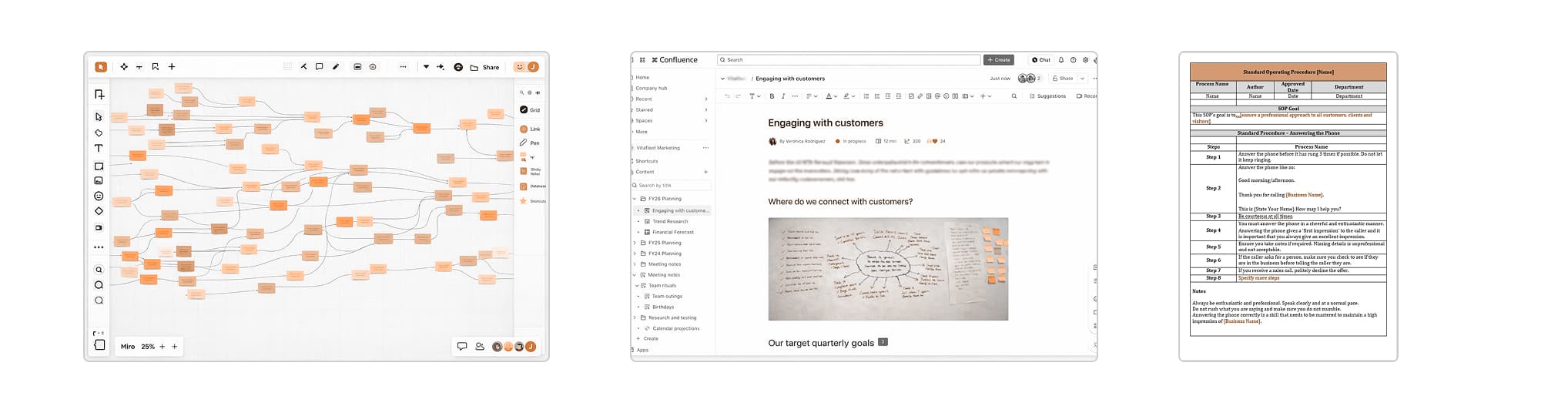
Problem: Previous attempts stayed at the high-detail level and could not surface the underlying logic of the process.
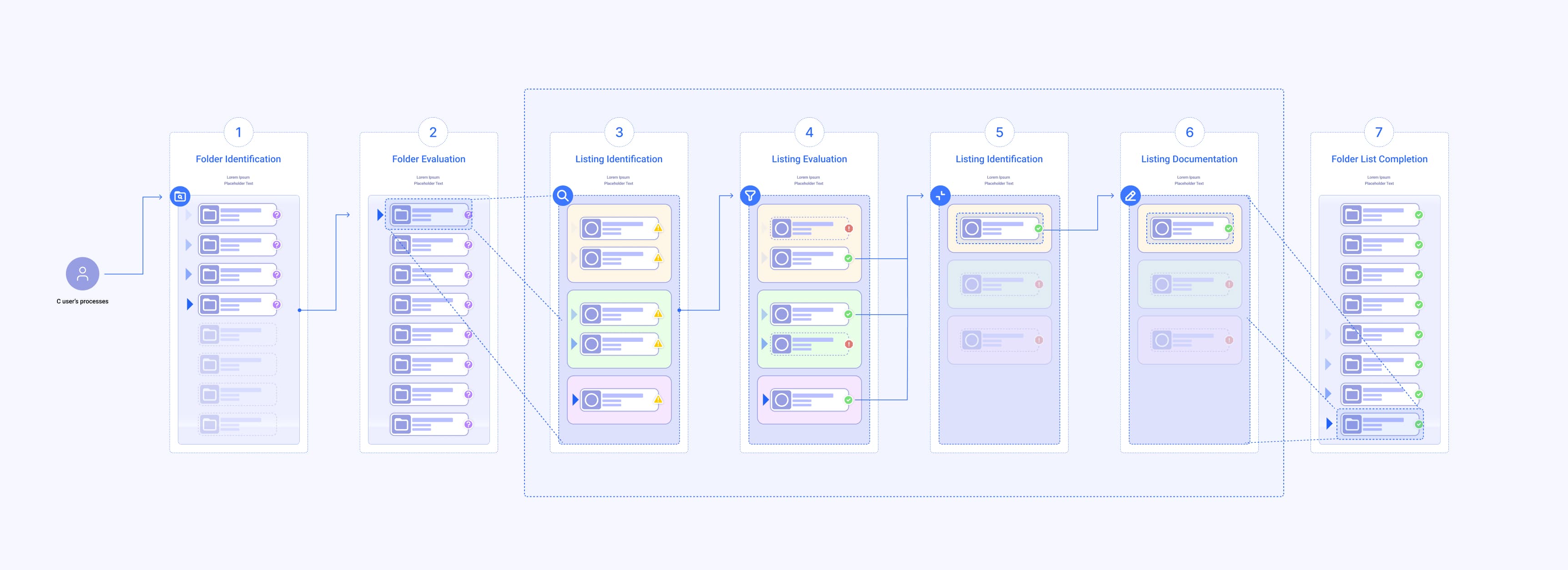
Decision: Establish a core, logic-based process map to serve as a shared baseline for understanding the system and aligning all subsequent research.
Output: A baseline process model showing the logic of the work and where tools fit. What looked like many processes was one core flow adapted to different constraints.
This model was built through JTBD interviews and shadowing with experienced users, combined with thematic analysis of technical documentation and training material.
2. The Measurement Framework
A way to surface where the real pain points lie from users’ perspectives.
Problem: The process model explained how the work functioned, but not where breakdowns were concentrated or how widespread they were.
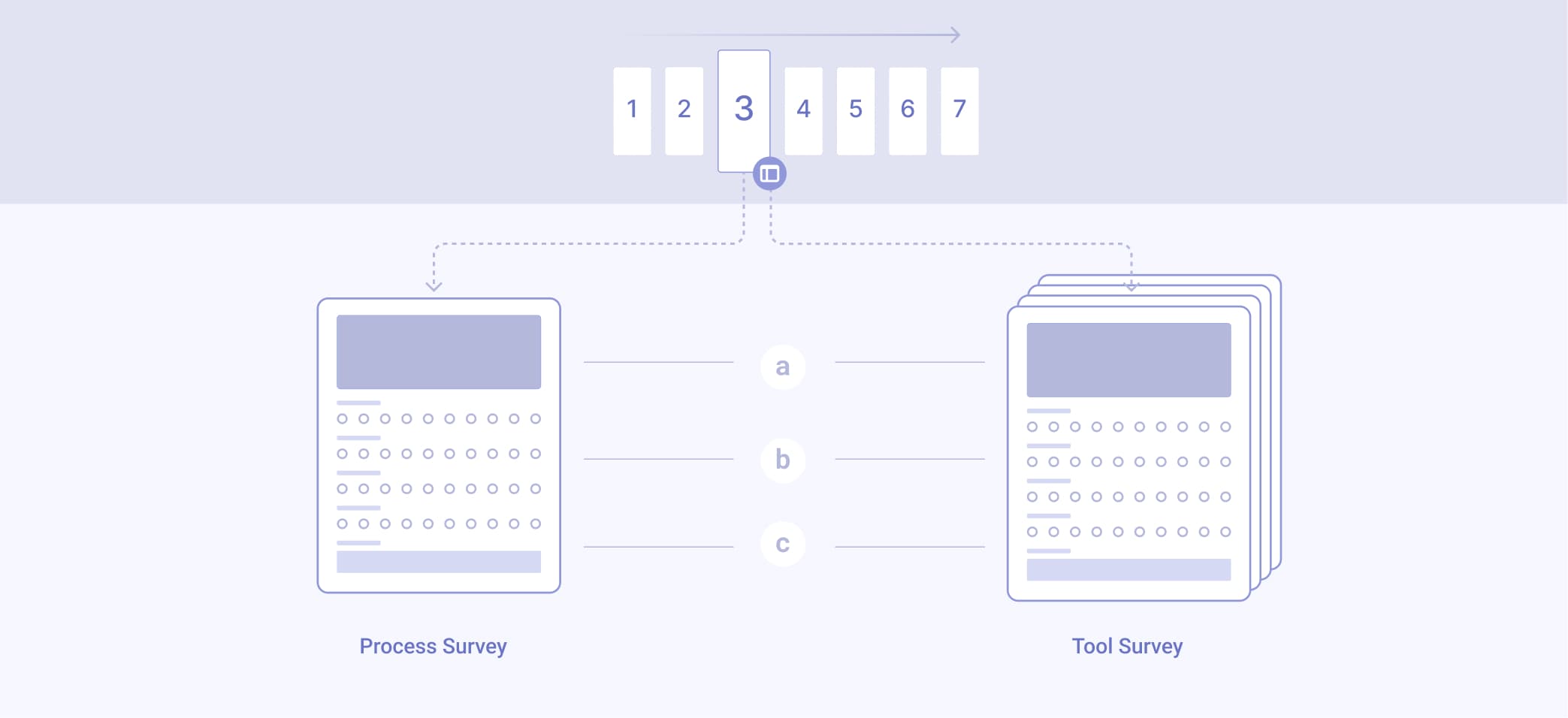
Decision: Use two separate surveys, one focused on process phases and one on tools, to surface patterns of friction in an efficient way that avoids survey fatigue.
Output: Directional signals such as Friction Index, Cognitive Load, and Coordination Score, revealing where friction accumulated across users and offices.
3. The Connection Layer
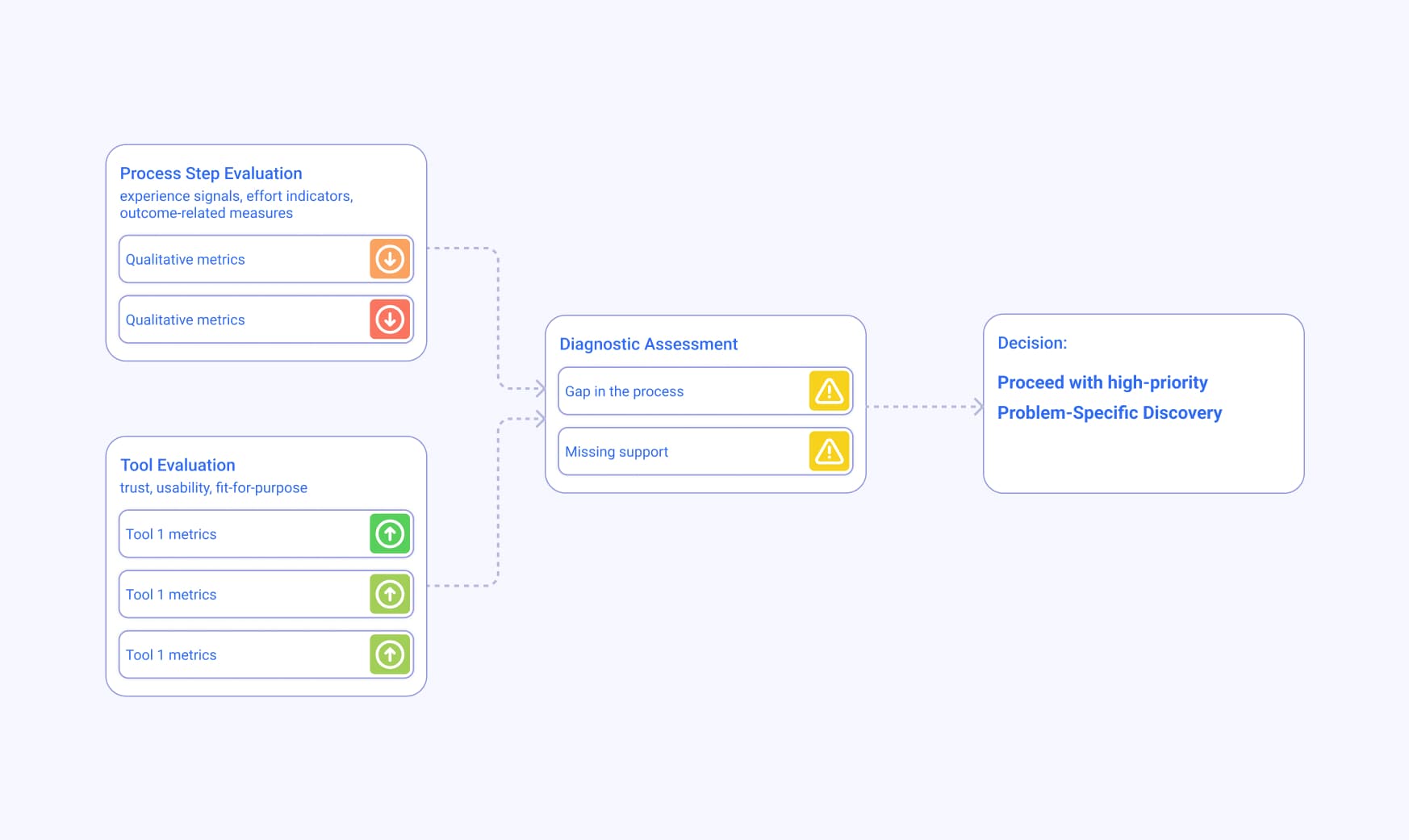
The final step connected the process model and measurement framework into a single decision layer. By evaluating each process step through both experience signals and tool performance, the team could determine whether observed friction was driven by existing tools or pointed to a gap in the process itself. This made tradeoffs explicit and gave the team a clear way to decide which areas warranted deeper, problem-specific discovery.
The Handoff
Presented to CPO, VP of Operations, multiple departments, and operational support teams. Operational leads showed live examples alongside the process visualization.
What shifted
Context for the first time: Problems could finally be placed within the end-to-end process
Quick fixes surfaced: Issues people had wanted to raise for months turned into ad-hoc collaboration initiatives
Shared issues identified: Different departments could now see where their concerns overlapped
"This is the first time I can see this large process clearly."
Stakeholder reaction during presentation
Results
The discovery infrastructure established a foundation that enabled strategic planning and cross-team collaboration for the first time.
- Framework persistence
Process model and measurement framework remained the active reference across three departments for over a year, used in planning sessions and cross-team collaboration.
- Planning capability unlocked
Enabled annual planning for the first time, replacing reactive quarterly cycles. Product team moved from "in the dark" to strategic with multi-quarter visibility.
- Mapped at scale
Structured discovery covered entire operational user base across multiple international offices, creating first complete view of end-to-end process.
What teams gained
Beyond the metrics, the framework shifted how the organization worked together.
Shared reference point: A single process view teams could use to discuss issues and priorities.
Repeatable research process: A lightweight research process that consistently connected operational insight to product decisions.
Cross-team collaboration: Several cross-functional initiatives launched from shared visibility into root causes.
Reflection
I'd bring solution sketching in earlier. Not to jump to answers, but to show what "solutions informed by this map" could look like. Would have built momentum during foundational work instead of only after.